
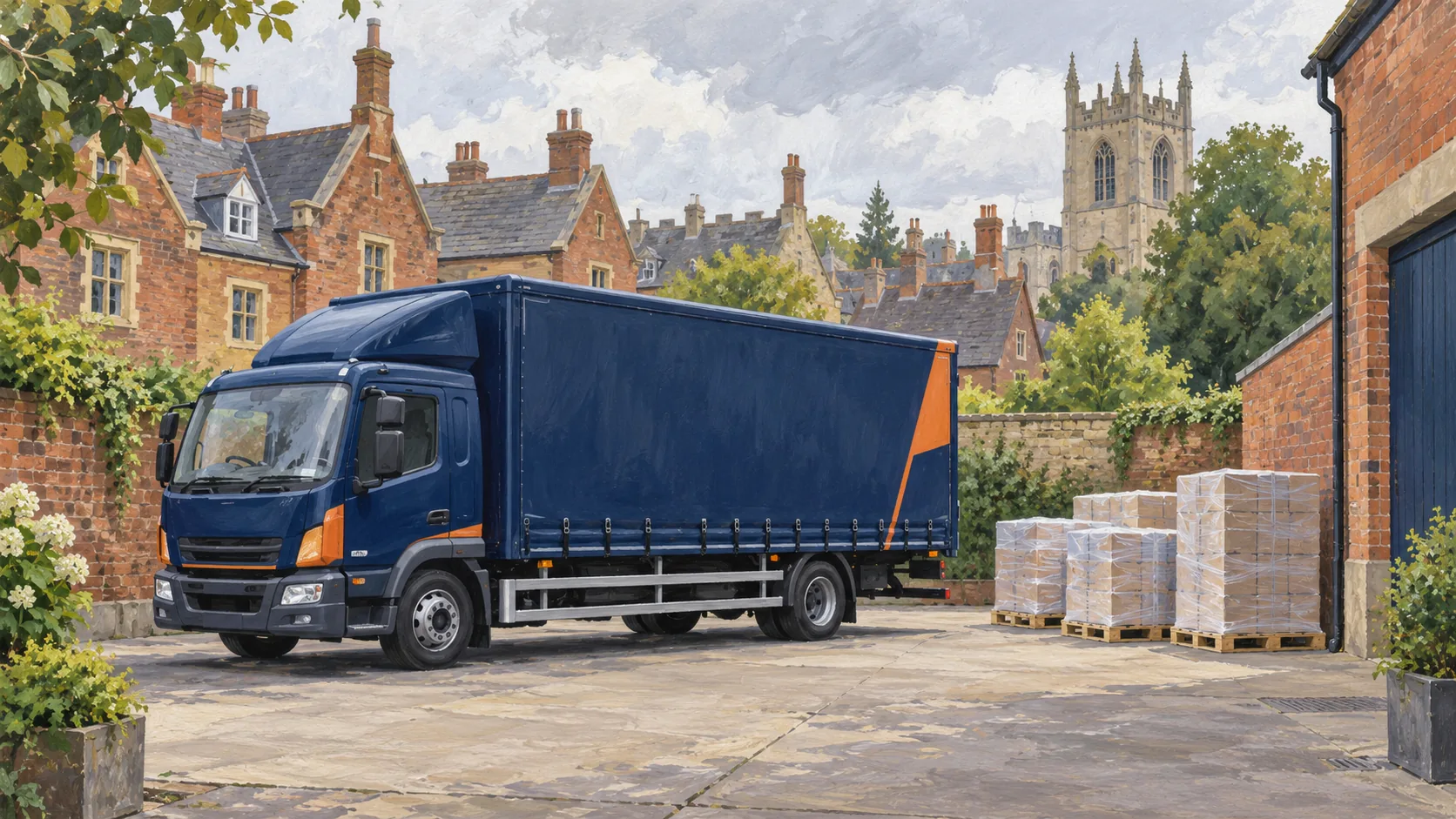
Plan the load before choosing the vehicle
Provide each unit’s dimensions and weight, total consignment weight, stackability and any loading order. If goods need side loading, rear loading or specialist restraint, describe that requirement.
Do not select a vehicle solely from its name. Payload, internal dimensions and handling equipment must all fit the consignment. The team will confirm suitability and availability before a booking.
Plan full-load freight around your Rugby access
For Rugby freight, distinguish a business's customer address from its receiving gate or yard. Provide the unit number, loading reference and unloading contact, then confirm equipment capacity for the packed load. A town-centre car park at Gas Street or Westway is a navigation reference, not an agreed pallet delivery point.
Record length, width, height and gross weight in the packed condition. Confirm the vehicle approach, handling equipment and receiving arrangements at both ends independently.
- Identify the Rugby premises and receiving entrance separately from any parking landmark.
- For full-load freight, prepare: total load and unit counts; loading method and sequence; receiving appointment.
Coordinate the two sites
Provide opening hours and any appointment or security requirements at both sites. Explain which party supplies the forklift, lifting equipment and people for each handover.
Flag delays that depend on a seller release, production run or site contact. Waiting, rescheduling and additional stops must be agreed as part of the quote.
Your Rugby enquiry checklist
- For full-load freight, have these details ready: total load and unit counts; loading method and sequence; receiving appointment.
- Give both full postcodes and identify the exact entrance and receiving point. CV21 is a location reference, not the whole service area.
- Explain any unresolved permission, timing or handling question before accepting a quote.
- Check the quote’s supplier, price, inclusions and booking terms before confirming.