Explain how the machine can be handled
Give the make or type, total mass, dimensions and manufacturer-provided handling information where available. Identify lifting points and any risk of movement or tipping.
Tell us if it contains fuel, oil, batteries or other materials needing review. Disconnecting, draining, dismantling and commissioning are not automatically included.
Plan machinery transport enquiries around your Pershore access
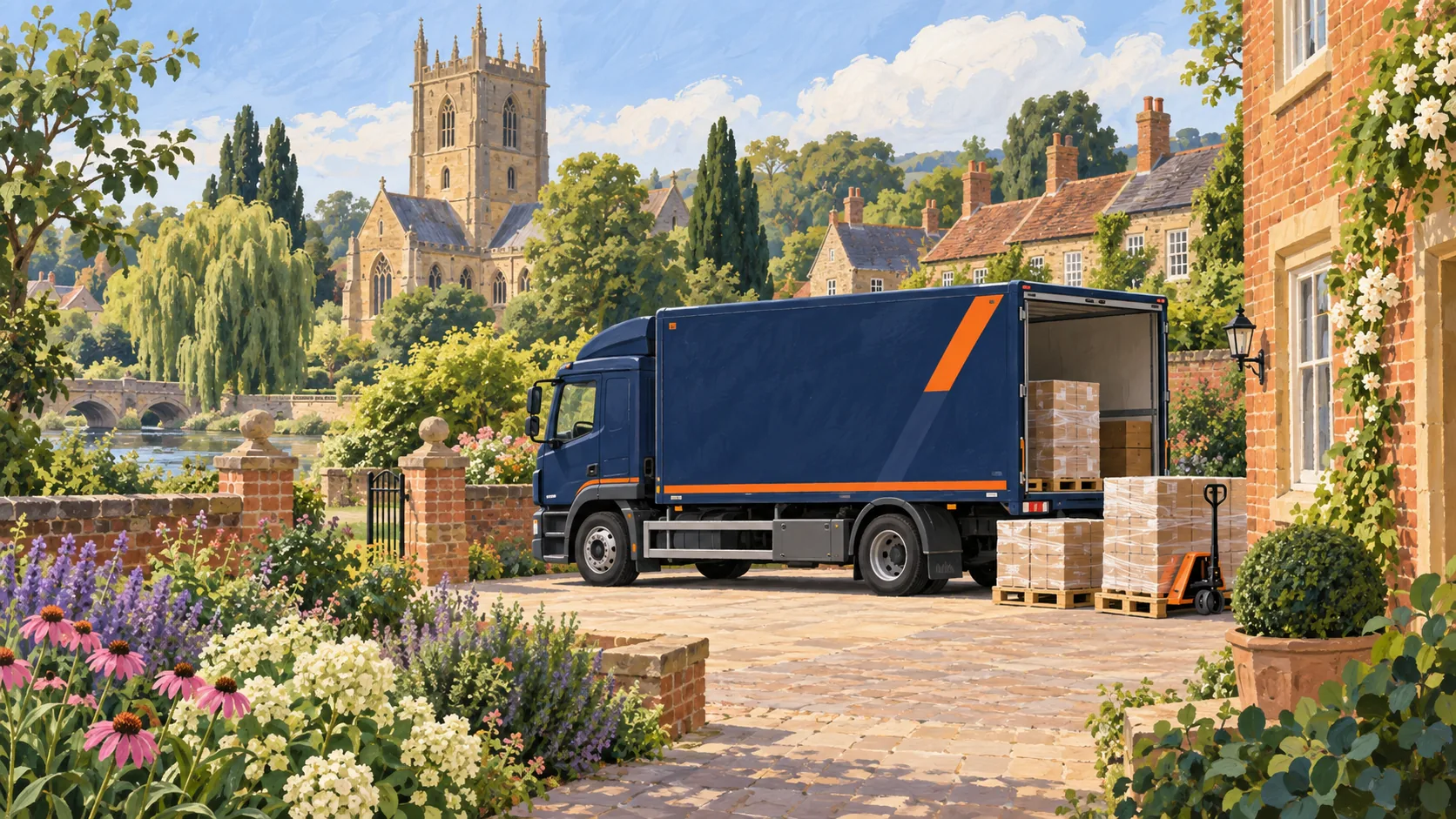
For Pershore freight, distinguish the customer's public entrance from the goods receiving point and confirm the surface under the pallet. If access is via a yard or shared drive, ask the occupier about turning space and permitted arrival times. Give packed dimensions and handling needs before a vehicle is selected.
Obtain the seller or site operator’s release instructions and the equipment needed to load safely. Declare unusual contents, fragile parts and anything that cannot be stacked before suitability is assessed.
- Confirm which entrance serves the WR10 property and check any restrictions at the proposed stopping point.
- For machinery transport enquiries, prepare: weight and centre of gravity; lifting method; fluids and preparation.
Identify equipment at each end
A heavy machine may need lifting equipment or transport beyond a standard van or pallet service. State who provides equipment and appropriately trained operators.
Requests are reviewed individually; this page does not promise crane hire, machinery installation or hazardous-goods transport.
Your Pershore enquiry checklist
- For machinery transport enquiries, have these details ready: weight and centre of gravity; lifting method; fluids and preparation.
- Give both full postcodes and identify the exact entrance and receiving point. WR10 is a location reference, not the whole service area.
- Explain any unresolved permission, timing or handling question before accepting a quote.
- Check the quote’s supplier, price, inclusions and booking terms before confirming.