
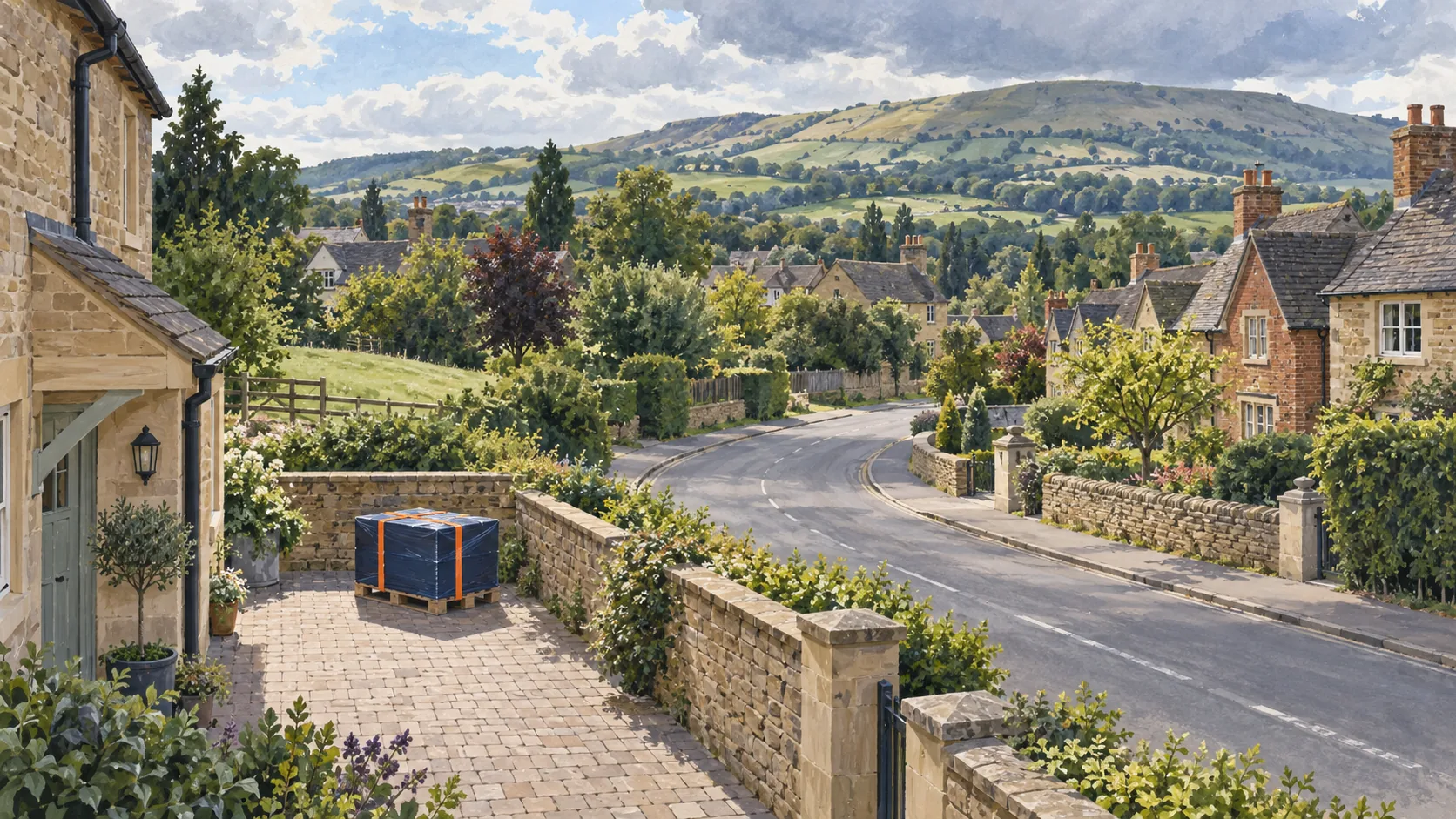
Check where a delivery vehicle can stop
Describe road width, low branches, gates, gradients and whether the vehicle can turn or leave safely. Add any parking restrictions or need to arrange access with neighbours or a property manager.
A postcode identifies the area but cannot describe your driveway. Include instructions for finding the actual entrance and a suitable place to unload.
Plan freight to a home address at your Bishop's Cleeve address
Give the surface and working space at the Bishop’s Cleeve destination. A pallet truck or tail lift needs a suitable operating position; access to a car park alone does not prove that heavy goods can be unloaded there.
Measure the goods as they will travel, including the base and wrapping. Loading and unloading are separate arrangements; confirm the people, equipment and space available at both addresses.
- For freight to a home address, prepare: residential access; firm level unloading area; tail-lift and handling request.
- Distinguish a residential front door, a shop’s goods entrance and a community venue’s unloading point. Give the actual receiving contact, not just a landmark in the village centre.
Kerbside and indoor delivery are different
Pallet freight may be handed over outside at an agreed accessible point. A pallet truck needs a suitable surface; gravel, soft ground, steps and slopes can prevent normal handling.
Ask explicitly if you need carrying into a building or placement beyond the unloading point. Do not assume this is included. For household carrying and removals, follow the Movivio link.
Your Bishop's Cleeve enquiry checklist
- Street, property number or business name and full postcode
- Loading entrance and any private-parking permission
- Separate collection and receiving time windows
- For freight to a home address, include residential access; firm level unloading area; tail-lift and handling request.
- Confirm the supplier, total price, handling scope and booking terms before accepting a quote.